Bolzano Memories
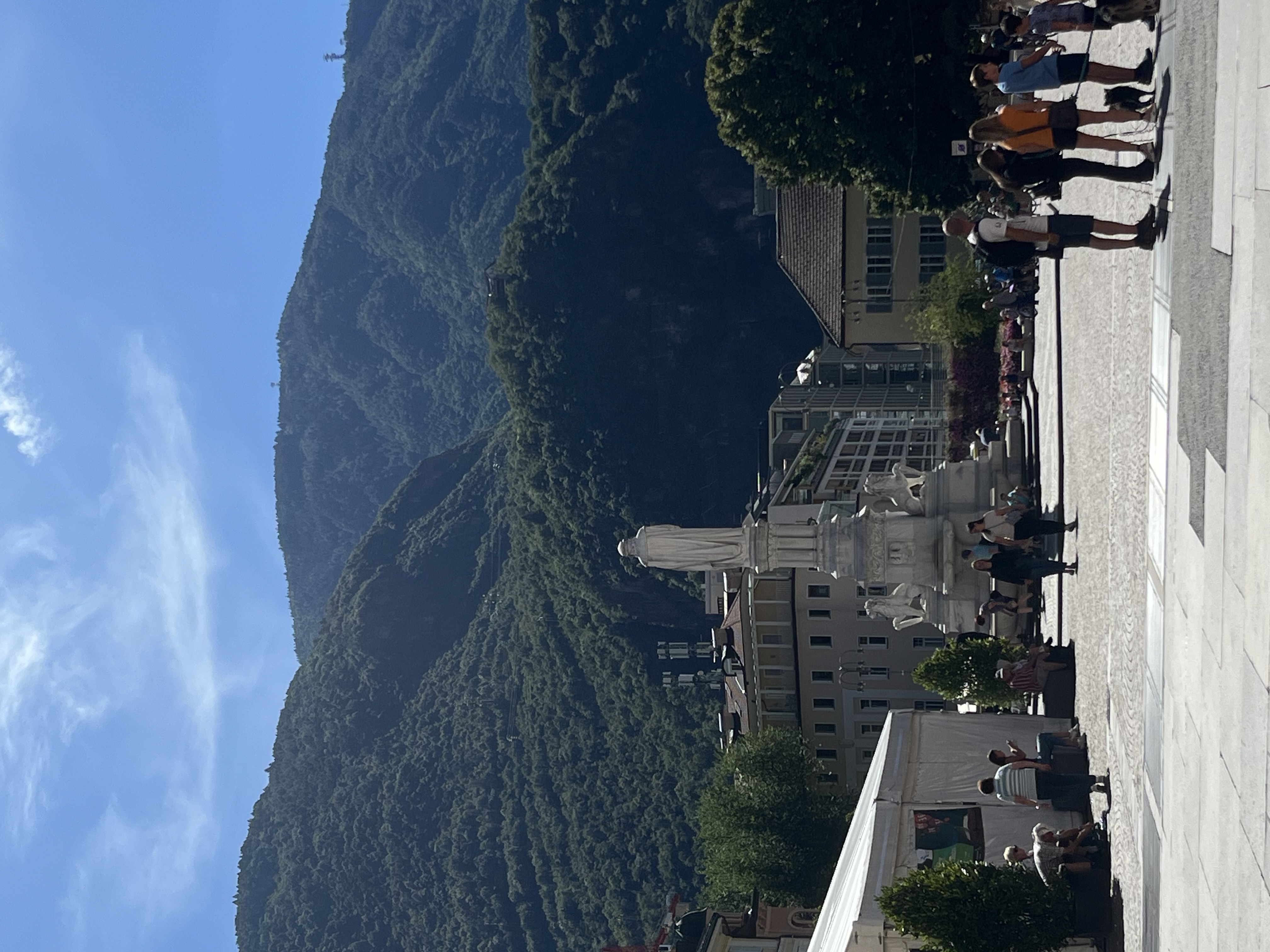
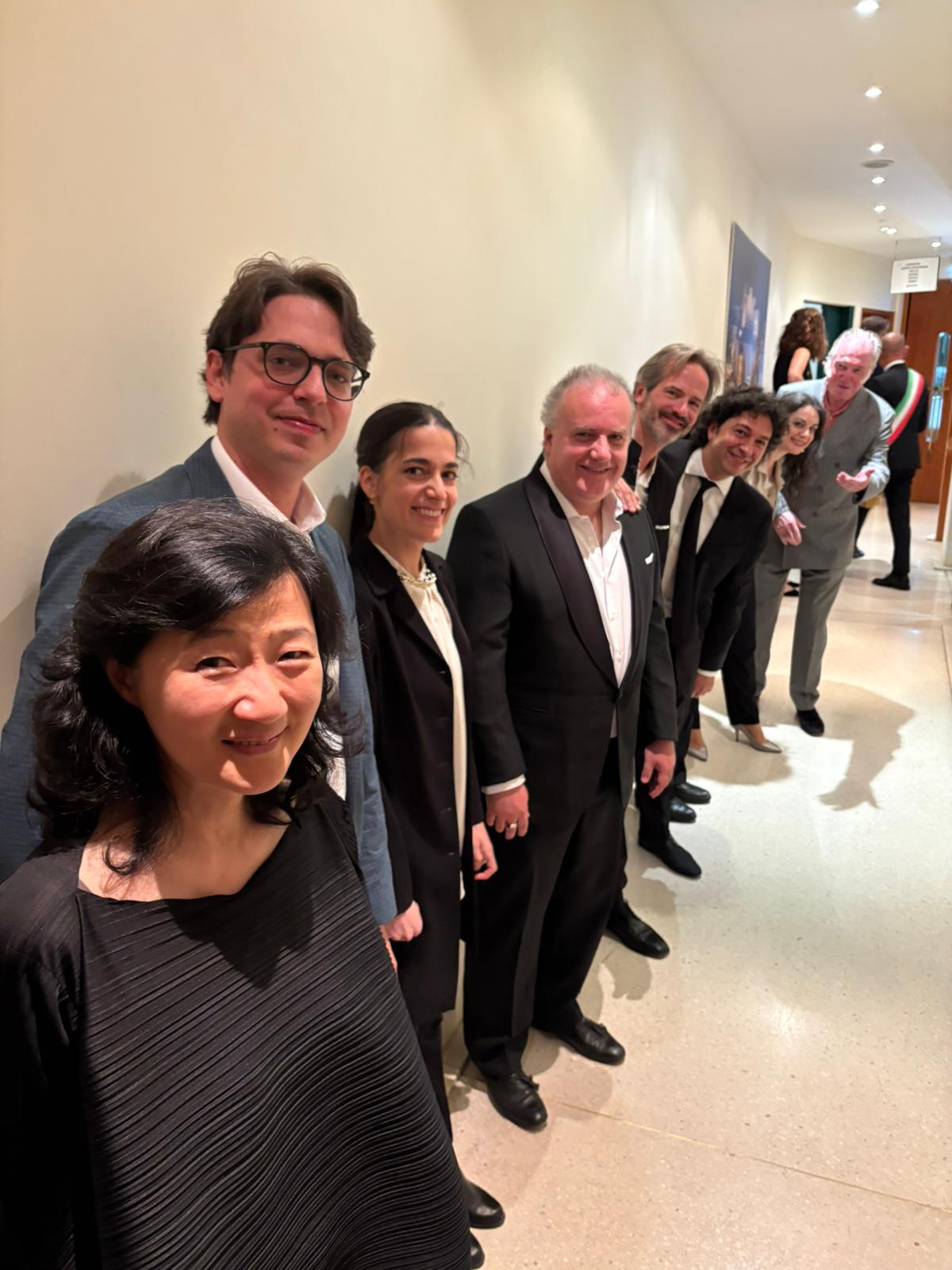
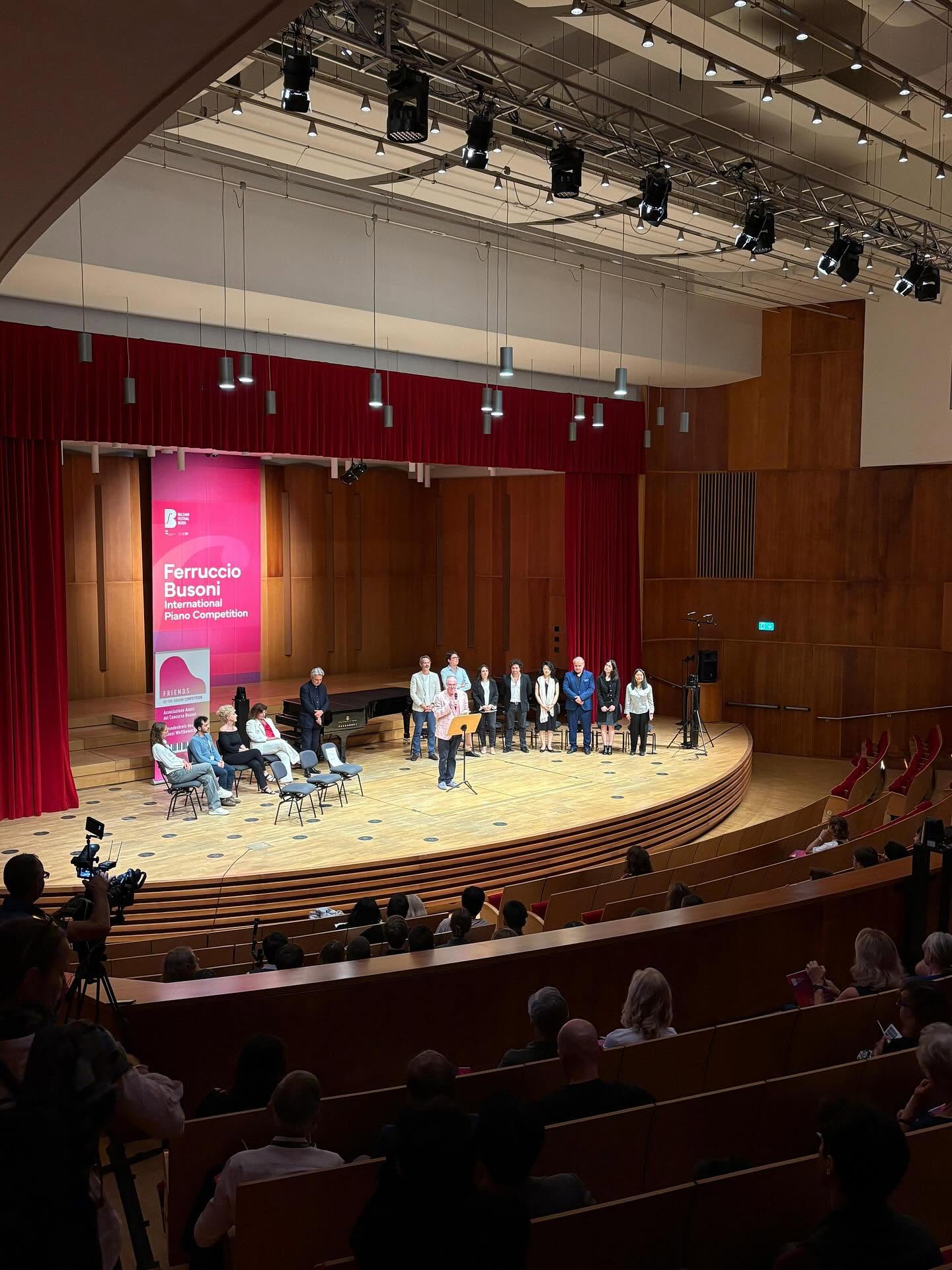
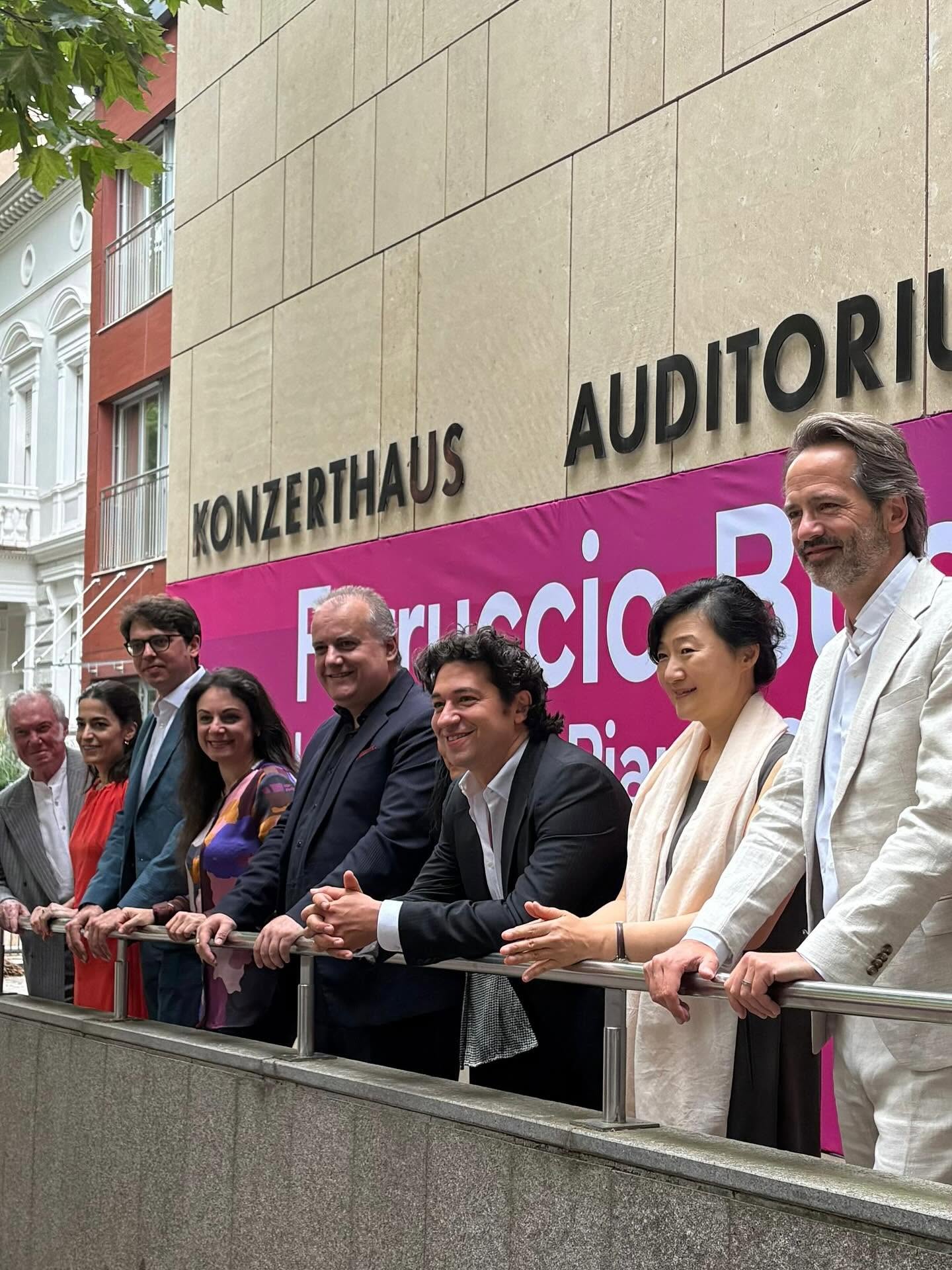
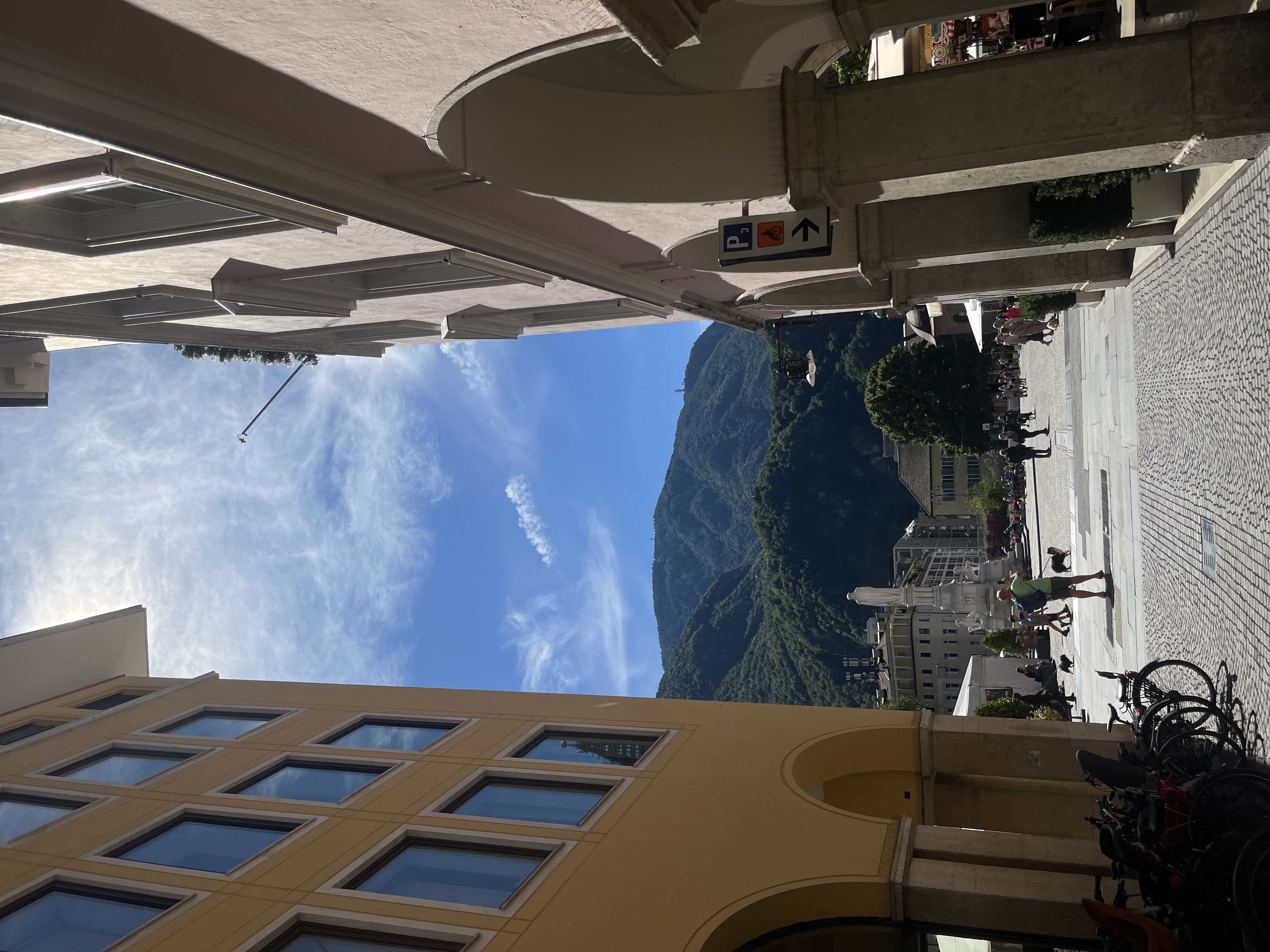
It was like a dream to return to Bolzano—the same mountains surrounding the town, the same palazzo in the center, the same church where candidates drop by before playing, the same conservatory for practice rooms, and those warm nights where people gather at 9 PM. Only the competition venue had been moved to a modern civic theater. It was a special honor to be invited as a jury member for the final rounds of the Busoni Competition last summer, over 30 years since I had last competed there.
I participated twice in the Busoni Competition. In 1989, I reached the semifinal, which was beyond my teacher’s expectation. However, the greater fortune of that year was discovering Schubert’s last sonata, and Debussy’s Étude pour les arpèges composés. It was Alexander Madzar’s final round recital that opened their magical worlds to me. He placed second, with no first prize awarded. I have never met him in person since, but I owe him a big thank-you. Both works have become favorites of mine and have traveled with me around the globe ever since.
When I returned to Busoni the next summer, in 1990, I won fourth prize and the Mozart special prize. Again, no first prize was awarded. Olivier Casals won second prize and Midori Nohara won third. Midori and I gave a joint recital in Bologna, and I gave a solo recital in a mountain village called Chiusa—meaning “closed.” I remember no competitive spirit, only how each of us wrestled with our own anxiety and limitations. In the end, we all became sympathetic to one another.
Most memorable were two reviews by Joachim Kaiser, Germany’s preeminent music critic. After my semifinal recital, he wrote in the local paper that I “played only perfect, attempting to please everybody”—and that he did not wish to see me anywhere again. I felt numb.
But a week later in the Frankfurter Allgemeine, after hearing my Mozart Concerto in the finals, the same Kaiser warmly praised my musicality. I remember wondering whether he would mind seeing me again after all.
Joachim Kaiser passed away a decade ago. I wish I could have met him in person. I have remained grateful to the bone for his first review—the negative one. I have never received as sharp or harsh a critique since. It became my standard for criticism and, looking back, the turning point in my artistic growth that made me the artist I am today. Thank you, Mr. Kaiser. Rest in peace.
§
Paul Keinrath, the current competition director, appeared to me as an idealist. He wanted to ensure that the competition was nothing less than a festival—a series of cultural events celebrating classical music. At every opportunity, he encouraged us jurors to exchange cultural ideas, reminded us of Busoni’s innovative spirit, and urged us to be courageous in raising our individual voices in voting.
The result of each round surprised us jury members, almost everyone. I accepted it, though not without question. The result of the final round was, however, indisputable.
The first prize winner, Yifan Wu, was impossible to miss from the very beginning. He differed from everyone else, possessing a rare art of playing reminiscent of the old masters. His program did not have a single truly virtuosic piece, yet he advanced all the way to the final—quite rare in competitions. His strength lay in magically colorful renditions and muse-like spontaneity. But I had concern whether he would be able to manage the 60 concerts awaiting him in the coming year.
If Wu was unmissable from the start, Christos Fountos was the opposite—a discovery that emerged gradually. He did not stand out to me until the chamber music round. Then, his Franck Quintet won me over completely. The musical insight he brought to this work was most impressive. It was clear the string quartet enjoyed playing with him the most, and they chose him as their collaborator for the next season.
Throughout the competition, despite the confidentiality of voting, we jurors developed certain assumptions about who among us was like-minded and who was not. Then came a big surprise, a few months after the competition ended. One jury member shared an analysis of our voting patterns through a data analysis app, once all votes had been released to the public. It showed who was closest in opinion to whom, who was most diametrically opposed, and by how much.
The finding: our assumptions were all completely wrong!
It taught us how untrustworthy our doubts could be. What better lesson for a judge? Such an unexpected and delightful conclusion to the competition—it felt like the playful final movement of an early Beethoven sonata.